 EN

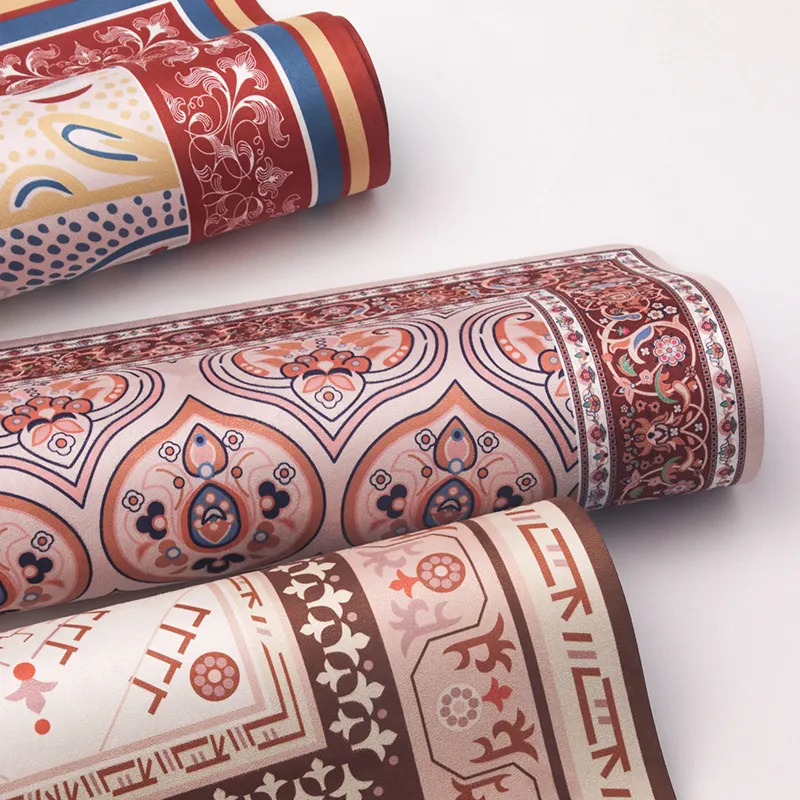
Superior Moisture-Activated Grip for Dynamic and Hot Yoga
How Sweat Triggers Enhanced Traction on Suede Yoga Mats
A suede yoga mat operates on a fundamentally different principle than conventional PVC mats: it uses moisture—not dryness—to enhance grip. While PVC relies on a high-friction, dry surface, suede’s microfiber top layer absorbs sweat rapidly. As perspiration wets the fibers, capillary action draws moisture away from your skin, creating a tacky, secure interface that anchors hands and feet even during vigorous Vinyasa flows.
Dry hands may feel slightly slippery on a new suede mat—this is expected, not defective. A light mist of water or just a few drops of sweat is enough to activate its traction. Many hot yoga practitioners observe improved grip within the first few poses as their body warms and begins to perspire. The more evenly damp the surface becomes, the stronger the friction—up to a point. Excess pooled water still benefits from a quick towel pass, but normal sweat levels actively enhance stability.
This moisture-responsive behavior makes suede uniquely suited for heated, dynamic practices. It supports challenging transitions, standing balances, and arm balances with consistent contact—unlike PVC, which often grows slick under sweat. It also reduces reliance on hand towels mid-flow, preserving rhythm and focus in studio settings.
Suede vs. PVC vs. Natural Rubber: Grip Performance in High-Heat, High-Sweat Sessions
When heat and sweat rise, mat materials respond in distinct ways—impacting safety, confidence, and continuity of practice.
| Material | Grip Mechanism | High-Heat, High-Sweat Performance | Common Trade-off |
|---|---|---|---|
| Suede (microfiber) | Moisture-activated capillary traction | Excellent when damp; improves with sweat; dry surface may feel slippery | Needs light moisture to activate grip |
| PVC | Dry sticky surface | Degrades when wet; perspiration can create slick patches | Low eco-factor |
| Natural rubber | Dry/damp traction with high friction | Strong but may become slippery if sweat pools; needs occasional wipe | Heavier, rubber odor possible |
Suede stands out in high-sweat conditions because moisture is its trigger, not its adversary. PVC loses integrity when sweat forms a thin film; natural rubber maintains solid grip until sweat accumulates beyond its wicking capacity. Suede, by contrast, leverages that same sweat to increase surface adhesion—making it the most consistently reliable option for hot yoga, power vinyasa, or any practice where thermoregulation drives heavy perspiration.
Long-Lasting Durability and Consistent Performance
Fiber Integrity and Abrasion Resistance After Extended Daily Use
High-quality suede yoga mats use tightly woven, long-staple polyester microfiber—a material engineered for resilience under repeated stress. Unlike cotton, which swells and weakens when wet, polyester microfiber has low moisture regain and high tensile strength. This preserves fiber structure during daily use, especially in high-abrasion movements like jump-backs, pivots, and toe drags.
Under standardized Martindale abrasion testing (ASTM D4966, 2023), microfiber suede demonstrates significantly lower fiber loss than cotton after equivalent wear cycles. Its fine, uniform filaments distribute friction across a broader surface area, preventing localized flattening or pilling. The nap rebounds reliably after pressure, maintaining consistent texture and grip session after session. Combined with reinforced weaving and non-slip backing, this structural integrity helps avoid the cracking, peeling, and thinning common in budget PVC mats—delivering predictable performance and fewer replacements over time.
Why Microfiber-Suede Blends Outperform Cotton and Nylon in High-Friction Asanas
Microfiber-suede blends strike an optimal balance between grip responsiveness and long-term durability—outperforming both cotton and nylon in demanding postures.
Cotton absorbs moisture readily, causing fibers to swell, weaken, and pill quickly during arm balances or weight-bearing transitions. Nylon resists absorption but lacks grip modulation: its low moisture affinity can lead to static buildup and inconsistent traction when sweaty. Microfiber suede avoids both pitfalls—wicking sweat efficiently while generating stable, moisture-enhanced friction without fiber breakdown.
| Material | Moisture Absorption | Abrasion Resistance | High-Friction Grip |
|---|---|---|---|
| Cotton | High; swells and weakens | Low; pills quickly | Dry grip only |
| Nylon | Low; static builds | Moderate; can snag | Inconsistent when sweaty |
| Microfiber-suede blend | Low; wicks away sweat | High; resists pilling | Improves with moisture |
In poses like crow, chaturanga push-ups, or jump-throughs—where palms and toes repeatedly slide, press, and pivot—the microfiber surface disperses mechanical stress evenly. That uniform load distribution minimizes wear points, helping the mat retain both visual freshness and functional reliability across hundreds of sessions.
Tailored Support for Diverse Practice Styles and Physiological Needs
Matching Your Suede Yoga Mat to Your Grip Profile: Dry Hands vs. Hyperhidrosis
Suede’s moisture-activated grip responds dynamically to individual physiology—making personalization key. Practitioners with naturally dry hands may experience minimal initial stick on a fully dry surface. A targeted mist of water at palm and foot contact zones activates traction without oversaturation—ideal for slower flows, yin, or static holds.
Conversely, those with hyperhidrosis often find suede delivers immediate, responsive grip as soon as sweat makes contact. Its rapid wicking action pulls moisture away from the skin-contact zone, sustaining friction through fast-paced vinyasa sequences without slippage.
Because suede doesn’t rely on adhesive chemistry like rubber-based mats—but rather on physical capillary interaction—it’s essential to align mat texture with your typical sweat pattern. A denser, shorter-nap suede offers more controlled, subtle activation for drier hands. A plush, highly absorbent top layer better accommodates early, sustained sweating. When possible, test both profiles in a heated environment before committing—this small step can significantly reduce hand fatigue and support safer, longer holds across all practice styles.
FAQs
1. Why does my suede yoga mat feel slippery initially?
Suede mats require light moisture to activate their grip. Dry hands may feel slippery; misting the mat lightly will trigger traction.
2. Are suede mats suitable for heated and dynamic styles like hot yoga?
Yes, suede mats perform exceptionally well in high-sweat and heated environments due to their moisture-activated grip.
3. How does suede compare to PVC and natural rubber for yoga?
Suede uses capillary action for grip when damp, while PVC degrades under sweat, and natural rubber offers solid traction but may become slippery if pools form.
4. Does microfiber suede wear out faster than other materials?
No, microfiber suede demonstrates high abrasion resistance and is engineered for durability across repeated use.
5. Can beginners use suede yoga mats?
Yes, beginners can use suede mats effectively, but they should ensure light moisture on the mat surface for optimal performance.