 EN

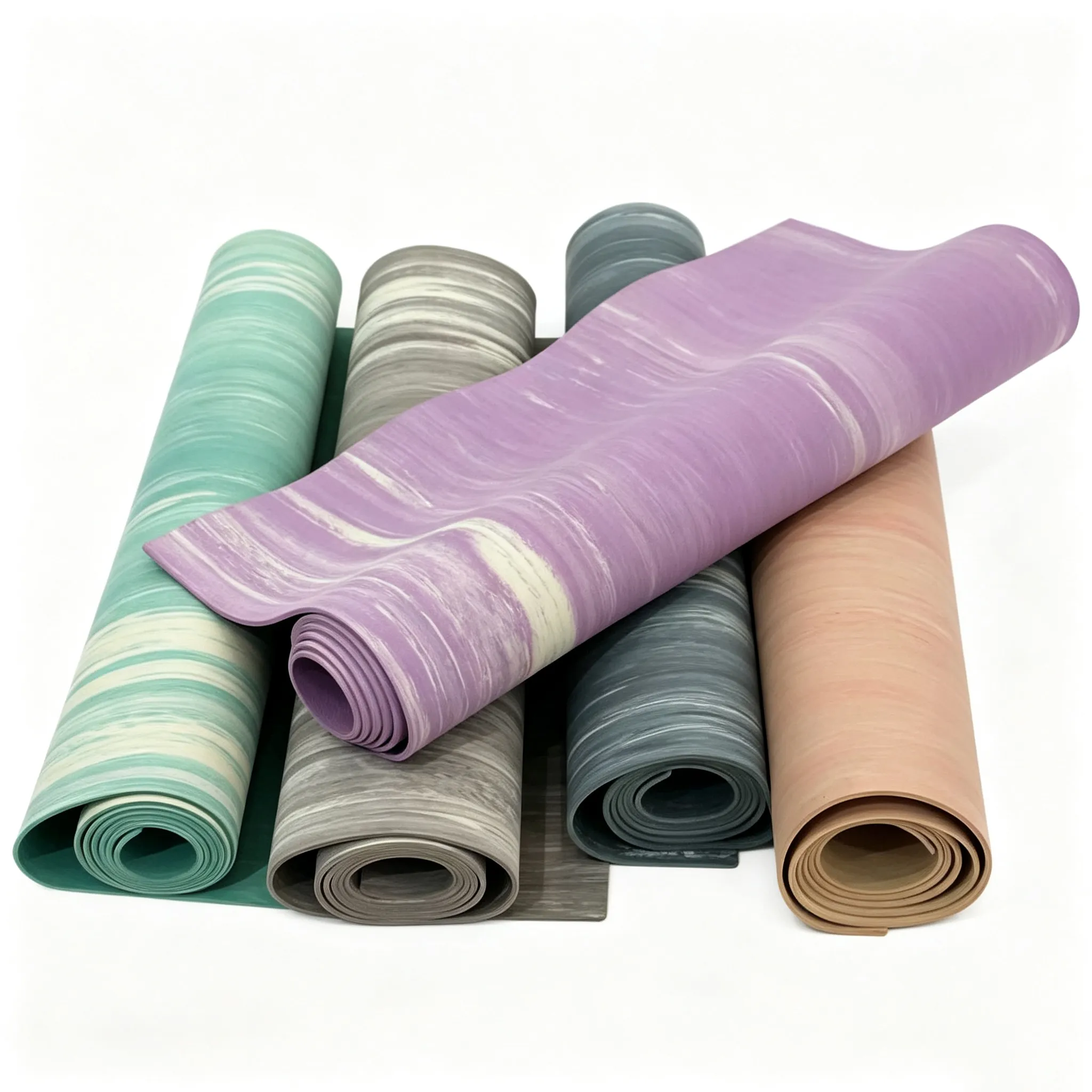
Understanding Capacity Types: Design, Effective, and Actual in Cork Yoga Mat Factories
Defining and Calculating Each Capacity Tier for Laminated Cork-Rubber Yoga Mats
In a cork yoga mat factory, capacity verification starts with three distinct tiers. Design capacity represents the theoretical maximum output—assuming all laminating presses run continuously at ideal speed with zero interruptions. Effective capacity adjusts for planned losses: scheduled maintenance, changeovers, operator breaks, and expected yield loss from normal scrap rates. Actual capacity goes further, subtracting unplanned losses—equipment breakdowns, material shortages, and adhesion-related rejects that halt or slow production.
| Capacity tier | What it measures | Example for a 3-press laminated cork-rubber line |
|---|---|---|
| Design capacity | Ideal output at full speed, 24/7 | 720 mats/hour or 17,280 mats/day |
| Effective capacity | Output after planned downtime and normal scrap | 17,280 × 0.85 availability × 0.90 yield ≈ 13,219 mats/day |
| Actual capacity | Output after unplanned downtime and quality loss | 13,219 × 0.85 ≈ 11,236 mats/day |
To calculate, use mats per press per hour × number of presses × operating hours. For example, a 90-second lamination cycle producing six mats per sheet yields 40 cycles per press per hour. Multiply by press count, then apply availability, yield, and OEE factors. In well-run lines, actual output typically lands 10–20% below effective capacity.
Why 'Design Capacity' Is Misleading—And How Effective Capacity Reflects Real Cork Yoga Mat Factory Output
Design capacity assumes perfect conditions: no tooling wear, no humidity impact on cork adhesion, and flawless rubber-cork bonding. In reality, laminated cork-rubber mats require longer press dwell times during humidity shifts, frequent cleaning to remove adhesive residue, and slower cutting speeds to prevent edge tear—all of which reduce throughput. Effective capacity accounts for these planned constraints, making it far more reliable for supplier evaluation than design figures alone.
Audited cork mat lines commonly operate at just 60–75% of their stated design capacity (2023). A factory quoting a 10,000-mat/day design capacity may realistically deliver only 6,000–7,000 mats/day as effective output. Buyers should therefore request OEE data, downtime logs, and documented changeover records—not rely on design claims.
Identifying Cork-Specific Production Constraints That Reduce Throughput
When verifying production capacity at a cork yoga mat factory, material behaviour and operational downtime create hidden losses that rated machine speed cannot reveal.
Moisture Sensitivity, Adhesion Variability, and Rubber-Cork Interface Failures
Cork is hygroscopic: it absorbs ambient moisture, and incoming sheets above 8–10% moisture content disrupt adhesive wetting—leading to uneven bonding and extended cure cycles. Rubber-cork interface failures often stem from trapped moisture, low surface roughness, or inconsistent adhesive film thickness. Adhesion variability also increases when cork density, porosity, or surface wax content varies between batches. Most high-performing laminating lines maintain ambient humidity between 45–55% to limit moisture uptake. Operators should verify cork moisture levels, room humidity, press dwell time, and adhesive mixing ratios before each shift. Peel tests on sample laminates post-shift detect weak bonds early—helping avoid high rejection rates that erode effective throughput even when machines run at full speed. Buyers must treat adhesion quality not just as a quality metric, but as a direct throughput constraint.
Downtime Drivers: Changeovers, Material Shortages, and Equipment Breakdowns in Cork Mat Lines
Changeovers between mat sizes or cork thicknesses can take 30–60 minutes—significantly lowering Overall Equipment Effectiveness (OEE) when done frequently. Material shortages cause idle time when cork sheets or rubber rolls fail incoming inspection. Equipment breakdowns—especially in laminating, sanding, or trimming stations—often create bottlenecks; a single failed cutting unit can halt the entire line. To validate true capacity, buyers should review unplanned downtime logs, mean time between failures (MTBF), and changeover records—and ask how preventive maintenance is scheduled and whether critical spares are stocked onsite. Reducing average changeover time by just 15 minutes per shift can add several hundred mats per month. Downtime data, not rated speed, reveals what a factory can consistently deliver.
Validating Core Process Capabilities Across the Cork Yoga Mat Production Flow
Lamination, Bonding, and Precision Cutting: Equipment Readiness and Control Plan Verification
A cork yoga mat factory must demonstrate three core process capabilities before bulk approval: consistent lamination, verified bond strength, and precision cutting. Begin with equipment readiness—confirm that lamination rollers maintain uniform temperature and pressure across the width of the sheet, and that dust extraction is active before cork enters the line. Bonding method matters critically: heat-bonded construction delivers superior longevity over solvent-based adhesive bonding—but carries a 15–20% higher unit cost (2025). Ask for evidence of the control plan, including peel-strength test frequency, dwell time logs, and non-conformance records. For precision cutting, determine whether CNC or die-cutting is used—and require a first-article inspection against an approved reference sample. Tolerances of ±1.0 mm on length, width, and corner radius reduce downstream returns. Confirm operators record key process parameters at defined intervals—not only at final inspection.
Conducting Due Diligence on a Cork Yoga Mat Factory: MOQ, Scalability, and Trust Signals
Before committing to a cork yoga mat factory, verify environmental and chemical compliance for the full laminate, not just the cork surface. Request FSC certification if cork is marketed as responsibly sourced, plus REACH and RoHS documentation and California Proposition 65 test reports for the complete mat construction. A natural cork top layer bonded to a PVC base with solvent-based adhesive is not eco-friendly—even if the top layer is natural. Maintain an approved reference sample and agree on clear acceptance criteria for appearance and workmanship before bulk production begins.
Minimum Order Quantity (MOQ) depends on configuration—not a fixed factory rule. Existing material combinations may support small batches, while custom colors, unusual fabrics, or new constructions usually raise MOQ. Some standard cork yoga mat configurations start as low as 50 pieces. Indicative manufacturing cost tiers range from roughly $1.69 to $4.57 per unit for budget cork/TPE mats and $8.12 to $14.20 or more for premium cork/rubber constructions. Clarify whether tooling, plate charges, or packaging artwork incur separate fees.
Scalability requires more than stated capacity. Request current capacity utilization, average lead time, and references from brands that ordered similar volumes within the past 12 months. Ask how the factory manages changeovers, material shortages, and peak-season scheduling. With the global yoga mat market valued at approximately $16.7 billion in 2025 and cork segments growing at roughly 7.5% CAGR, consistent bulk output is essential. A plant that only runs samples may lack the systems to sustain large production runs.
Use these trust signals to confirm a factory can deliver consistent quality at scale:
- Third-party audit reports and documented corrective actions
- Material traceability from cork lot to finished mat batch
- On-site or third-party pre-shipment inspection rights
- References from brands with similar order volumes and product specifications
- Clear dimensional, bonding, branding, and packaging checkpoints
Treat samples as a reference point—not proof of bulk capability. A factory that allows inspection and shares batch-level traceability is usually a safer long-term partner.
FAQ
What is the difference between design, effective, and actual capacity?
Design capacity is the theoretical maximum output under perfect conditions. Effective capacity accounts for planned losses like scheduled maintenance and normal scrap. Actual capacity includes both planned and unplanned losses, such as breakdowns or material shortages.
Why is effective capacity more reliable than design capacity?
Effective capacity accounts for real-world variables like planned downtime, making it more accurate and reliable for evaluating a factory's output potential than the idealistic figures of design capacity.
How does moisture content affect cork yoga mat production?
Cork is hygroscopic and can absorb moisture, disrupting adhesive bonding and leading to extended curing cycles. This can significantly affect throughput and product quality.
What factors should buyers consider when verifying a factory's capacity?
Buyers should look at OEE data, downtime logs, changeover times, and machine readiness. Reviewing unplanned downtime and preventive maintenance records is crucial for assessing consistent capacity.
What trust signals indicate a reliable cork yoga mat factory?
Third-party audit reports, material traceability, batch-level inspection rights, and references from brands with similar volumes and specs are clear indicators of a reliable supplier.
Table of Contents
- Understanding Capacity Types: Design, Effective, and Actual in Cork Yoga Mat Factories
- Identifying Cork-Specific Production Constraints That Reduce Throughput
- Validating Core Process Capabilities Across the Cork Yoga Mat Production Flow
- Conducting Due Diligence on a Cork Yoga Mat Factory: MOQ, Scalability, and Trust Signals
-
FAQ
- What is the difference between design, effective, and actual capacity?
- Why is effective capacity more reliable than design capacity?
- How does moisture content affect cork yoga mat production?
- What factors should buyers consider when verifying a factory's capacity?
- What trust signals indicate a reliable cork yoga mat factory?